Samstag, 18. Januar 2020

Poll: What was the best German rarity in 2019?


Just as with last year's Laughing Gull in Hamburg, the final days of 2019 yielded an awesome rarity for birders and twitchers in one of Germany's metropolises. This year it was a Yellow-billed Loon that would turn up on the outskirts of Berlin on Dec 28th and linger into the new Year to be admired by bird enthusiasts from near and far.
Besides the Loon, many other great birds turned up in Germany in 2019, some of them showing beautifully for hundreds of birders, others disappearing right after the discovery. Some individuals still leave room for discussions, especially about their provenance, others were so kind as to show up several times along their routes through Europe, leaving little doubt about the birds' abilities of travelling hundreds or even thousands of kilometers around the world and turning up in the weirdest places, far away from their usual ranges.
In the following I try to give an overview about the most astonishing bird finds of 2019 in Germany. Afterwards, it's your turn to decide, which bird you think deserves to be awarded first place as "Best rarity in Germany 2019".

What was the best vagrant to Germany in 2019?


pollcode.com free polls
If the poll doesn't let you vote please click here. I hope this works

Yellow-billed Loon (Gavia adamsii)
On December 28th a Yellow-billed Loon was found on Müggelsee, in the outskirts of Berlin. It's still showing awesomely to this day and was thus already successfully twitched by dozens if not hundreds. While it may not be the rarest find of 2019, with a little more than 100 previous records in Germany, rarely has there been one so easy to observe and so accessible, so perhaps you think it should be rewarded for this showiness.
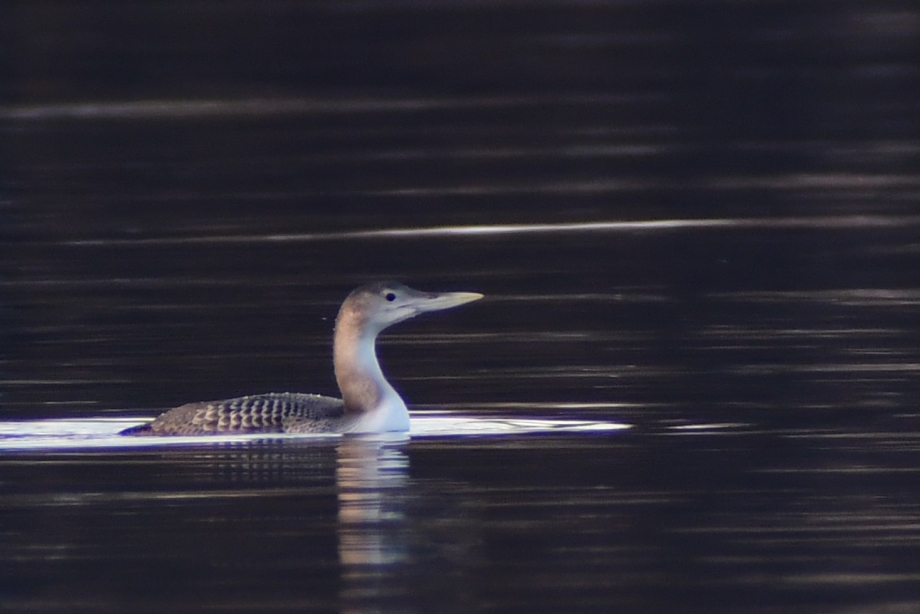
© Wolfgang Püschel
Falcated Duck (Mareca falcata)
Falcated Ducks in Europe are always subject to discussion, as the question about their provenience quickly arises. Even though they are common in captivity, this individual, observed between November 24th and December 15th on Forggensee in southern Bavaria has all the credentials it can have as a vagrant to Central Europe. It bears no rings, has no damages to the feathers and is as shy as the many other wild ducks surrounding it, many of which could've have supported it as carrier species.
So, even though Falcated Duck is still only in category D (uncertain provenience) on the German list this beautiful drake might perhaps become the trigger for the German avifaunistic commission to reconsider the about 10 previous records of unringed Falcated Ducks in Germany. The Dutch show that a different approach is possible. Do you agree?
Sichelente  - Ingo Weiß
© Ingo Weiß
King Eider (Somateria spectabilis)
When this adult male first showed up on October 6th in Schleimünde at the Baltic Sea it didn't draw much attention as it seemed to be off limits to twitchers. But after a while it was noticed that the bird could indeed be seen from the nearby shore with a good scope, leading hundreds of interested birders to try their luck. Given that its associated with just a handful of Common Eiders, finding it poses no big problem under favourable circumstances. Perhaps you think, such obligingness and beauty should be rewarded?!
Prachteiderente  - René Schaack
© René Schaack

Surf Scoter (Melanitta perspicillata) 
On January 22nd a drake Surf Scoter from North America was discovered just north of my former home island Spiekeroog in the North Sea. Unfortunately it didn't stay for long and couldn't be refound by twitchers who came the next day, but given that there are still only 11 previous records of this beautiful duck in Germany, I believe it deserves a spot in this list :)
Brillenente  - Klaus Hinsch
© Klaus Hinsch
Black Scoter (Melanitta americana)
Last year I proudly presented the second (acceptable) Black Scoter for Germany, which had been discovered at Schöneberger Strand. However, as 2019 shows, the species has possibly only been overlooked before. 2019 saw not only one, nor two, but three different Black Scoters in German waters. A bird on April 3rd, offshore from Sylt was a one-day wonder and the bird from Schöneberger Strand returned from December 10th onwards. But the star bird of 2019 was the drake at Geltinger Birk that showed beautifully from November 9th till December 22nd, among a pod of many other cool seaducks to be seen by hundreds of lucky birders, many of whom combined it with the King Eider nearby.
Pazifiktrauerente  - Johannes Martin
© Johannes Martin
Red-wattled Lapwing (Vanellus indicus)
Definitely the most unexpected species for Germany in 2019 and probably not on many people's radars. Unfortunately, this incredible find was only observed by a single birder on May 31st in Buch, Bavaria. The likelihood of a rarity committee ditching it in category E (likely escaped from captivity) would have been great, but incredibly this bird was observed several times along its way from its normal range in the Middle East towards the northwest (Croatia May 14th, Belgium June 11th, Netherlands June 19th and June 23rd), giving it much more credibility and showing that in Birding one should always expect the unexpected.
Art nicht in der Liste  - Anonymus
© Leon Wischenbarth
Stilt Sandpiper (Calidris himantopus)
News broke on July 13th that Germany's 3rd Stilt Sandpiper could currently be observed at Meldorfer Speicherkoog. A few lucky lads, who had come for the Pelican got lucky, but many twitchers on their way to the North Sea coast soon received the disappointing news that it had disappeared after just an hour. Incredibly, a week later it was refound 95 km away at Alter Wapeler Groden in Lower-Saxony, where it stayed from July 20th till 27th showing awesomely for hundreds of happy twitchers. What a beauty!
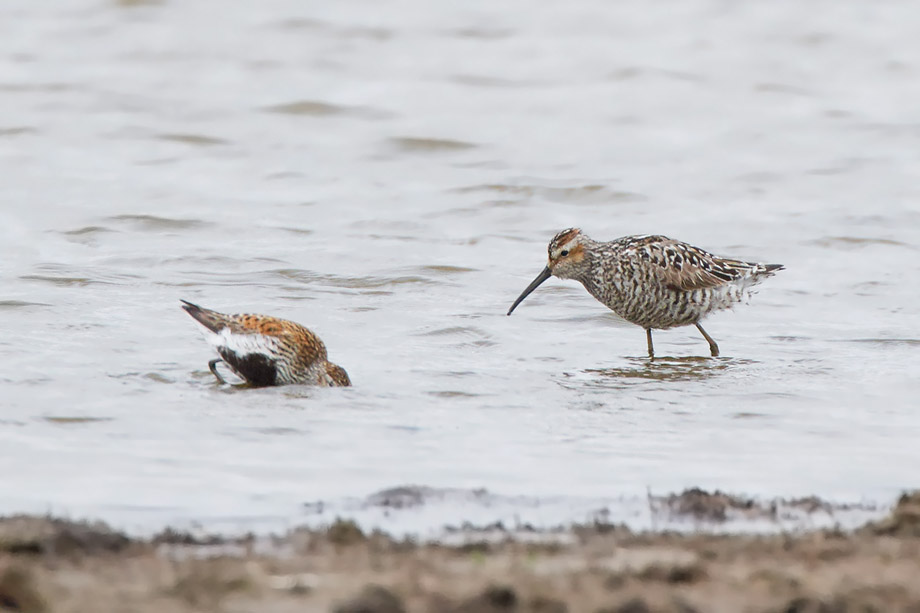
© Axel Halley
Laughing Gull (Leucophaeus atricilla)
Last years Laughing Gull from Hamburg disappeared just a few days before 2019 and it seemed like no one would get this species onto their year list. But on January 20th a bird appeared at Bordesholmer See in Northern Germany. Incredibly, it might have been yet another individual of this species that has only around 15 previous records in Germany, as some plumage details and bill structure don't seem to match, but opinions are still split about this. What do you think?
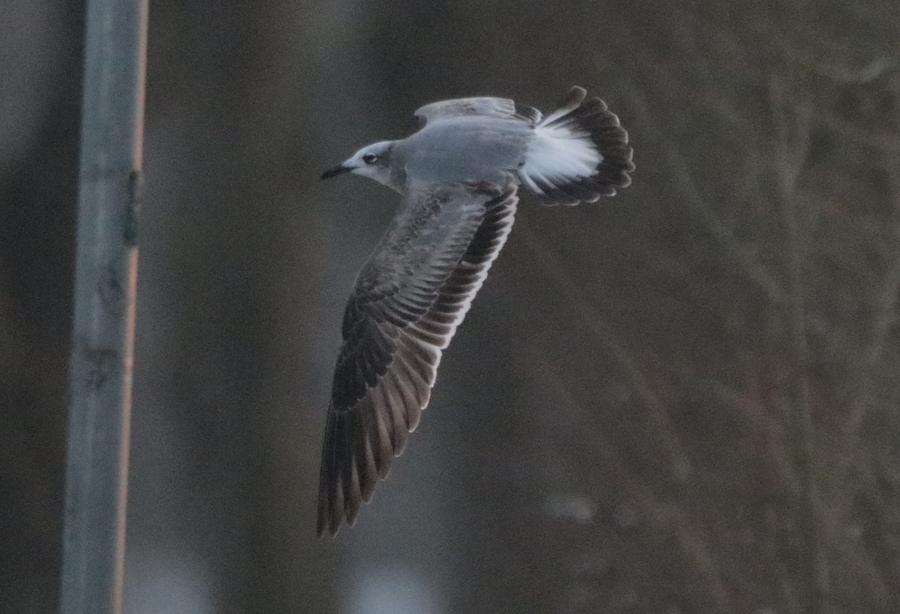
© Mathias Jönck
Audouin's Gull (Ichthyaetus audouinii) 
There are only 5 previous records of this stunning gull species from Germany but this year saw two different individuals, unfortunately both being only one-day wonders. The first individual surprised the author of this article as a flyby on April 12th near Beckdorf south of Hamburg and the second one was also seen only by a single observer on July 13th at Horumersiel, but at least he managed to get this shot. Perhaps it could have been refound the next day, but most twitchers rather tried to relocate the Stilt Sandpiper at Meldorfer Speicherkoog that had shown up simultaneously.
© Andreas Michalik
Great White Pelican (Pelecanus onocrotalus)
This neat Pelican showed for the prolonged period of time between June 21st and November 6th at Beltringharder Koog, occasionally wandering around and showing up on the other side of the Elbe in Cuxland and around Bremen. Probably the same bird is now in the Netherlands. Given its age and plumage it stands good chances of getting accepted as a truly wild bird, a fate that in recent times only 2 other birds have met, most others being discarded or proven as escapees (however the German rarities committees and the German Ornithological Committee still disagree about this)
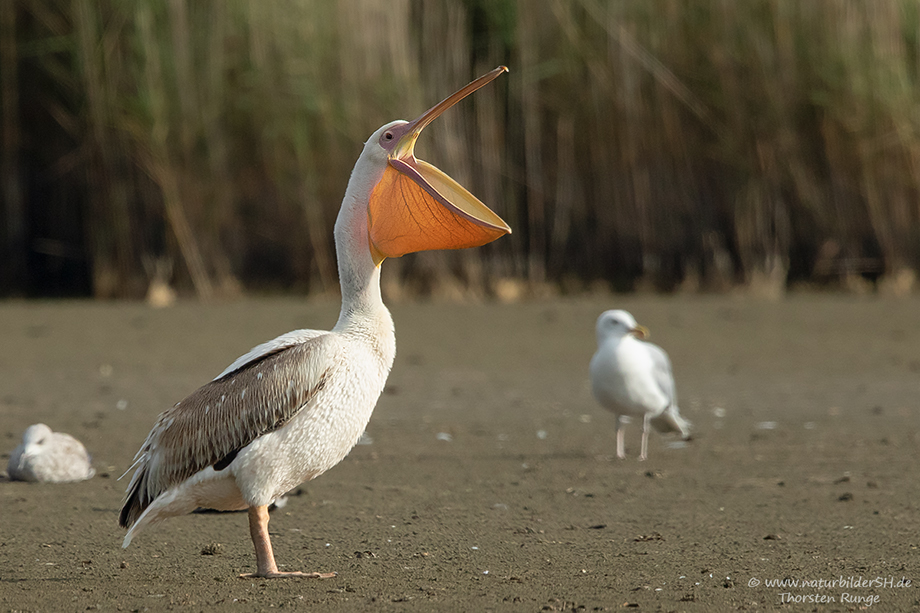
© Thorsten Runge
Cinereous Vulture (Aegypius monachus)
There are around 11 previous recent records of Cinereous Vultures from Germany, but given that some have been shown to stem from reintroduction schemes the species still lingers in categories B and E on the German list. Given however, how this species is becoming ever more frequent in Germany one wonders when the species will finally get accepted. While a satellite-tracked individual  from a reintroduction programme in Spain could be observed on May 12th around Hemslingen roughly between Hamburg and Bremen, birds that were observed between April 15th and April 21st at Hiddensee, May 17th till August 26th around Rügen and December 13th at Rügen again or another seen from a paraglider on May 7th at Kandern in southwesternmost Germany could very well be wild bred individuals. There's no reason to believe that only reintroduced birds could make the journey to Germany, especially considering the numbers of Griffon Vultures that show up more and more regularly in Central Europe. Personally I wouldn't have a problem of counting these birds, even if they were proven to be reintroduced birds...
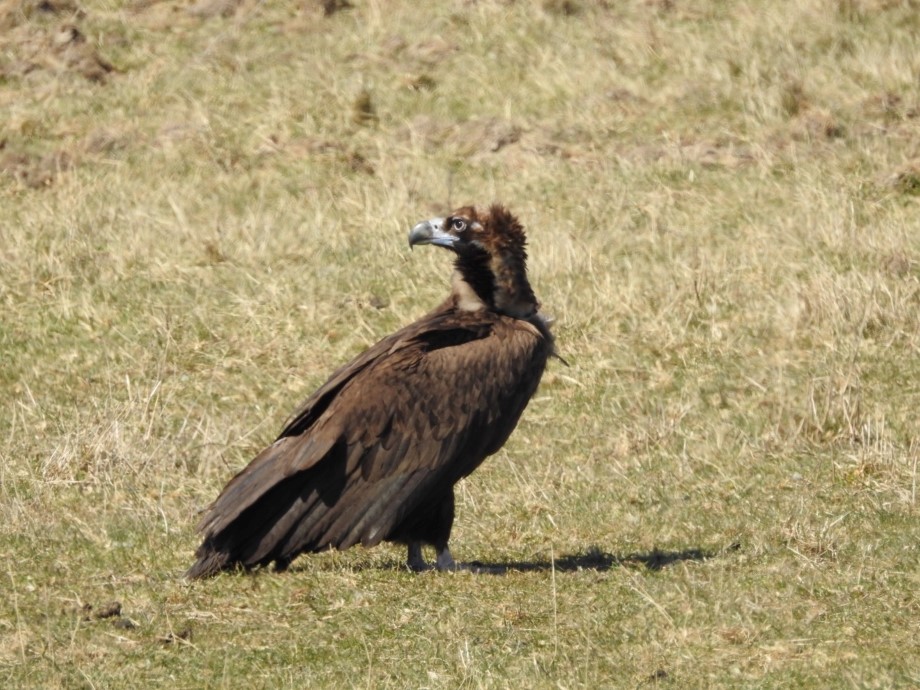
© Jörg Düsterhöft

Eastern Imperial Eagle (Aquila heliaca)
Satellite trackers have shown us in recent years that Eastern Imperial Eagles probably reach Germany on an annual basis, but still there are only 17 previous accepted records of 11 individuals. Four of these refer to satellite-tracked birds that were never seen by any birder in Germany, so this majestic individual was happily twitched by hundreds of birders from near and far. It stayed at Randowbruch in Eastern Germany close to the Polish border between May 17th and October 13th, often soaring together with Lesser Spotted Eagles and showing breathtaking attacks towards the local White-tailed Eagles
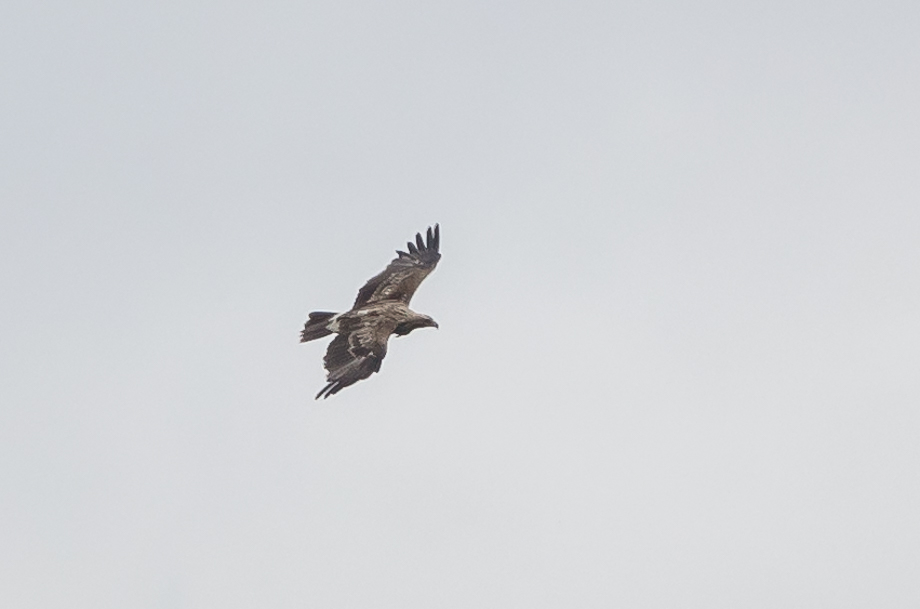
© Oliver Käseberg

Bimaculated Lark (Melanocorypha bimaculata)
The status of Bimaculated Lark in Germany had always been unclear, with two previous records, one never submitted, the other one involving a bird that was missing a foot, which of course leads some sceptics to think of an injury resulting perhaps from the cage bird trade. But with this bird showing from September 8th till 12th near Herbstadt in northern Bavaria I believe there is little doubt it being a genuine vagrant. Will Bimaculated Lark finally get into category A?
© Thomas Kuhn

Eastern Olivaceous Warbler (Iduna pallida)
From May 25th till 27th in Wittmoor just north of Hamburg this little rascal caused lots of confusion amongst birders as the calls wouldn't match the song or plumage. It took a while, but finally after three days the bird could be confirmed as Germany's third Eastern Olivaceous Warbler. A big thanks to the birders who took the time to carefully analyse such minuscule characters such as the stepping of primaries and bill curvation!
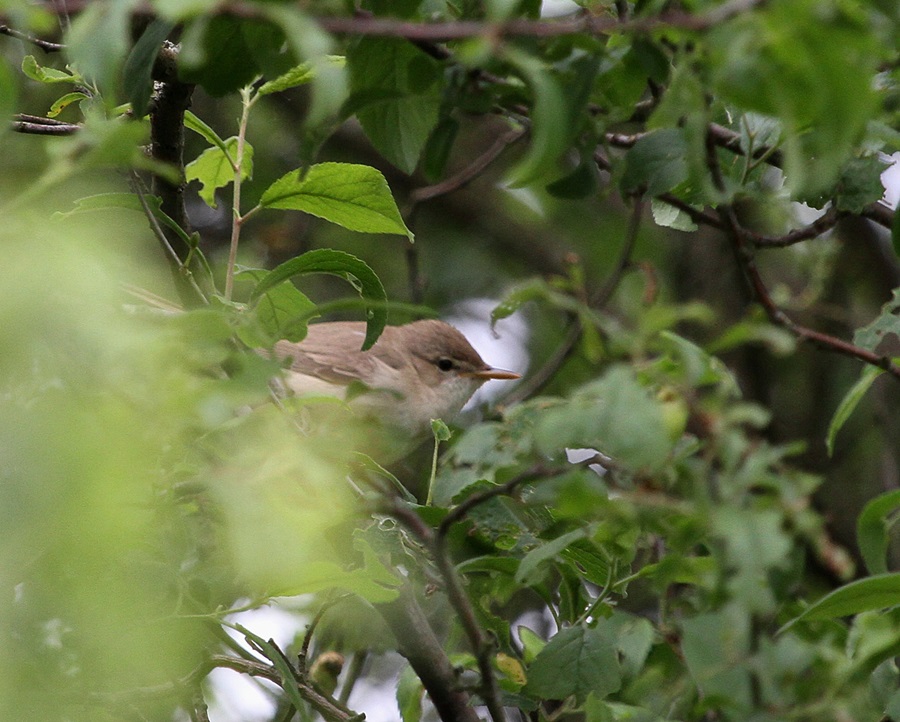
© Bastian Meise

Paddyfield Warbler (Acrocephalus agricola) 
On June 2nd this lovely little brown jobskulked through the reeds on Heligoland. Most of the previous 11 records involved mist-netted birds or they were one-day wonders so that this bird must have been new to almost all the lucky observers that were present on Heligoland that day.
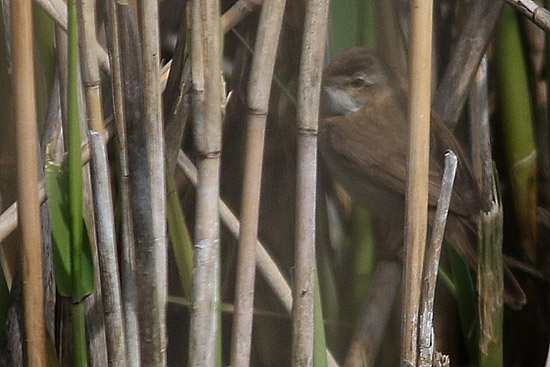
© Jochen Dierschke

Red-rumped Swallow (Cecropis daurica)
This species is the only one I can think of that had something of influx into Germany this year. Unfortunately the Pine Grosbeaks failed to deliver to the anticipating German birders and also just a handful Two-barred Crossbills reached the country even though both species made massive movements just north of Germany. The Red-rumped Swallows on the other hand, coming from the south reached Germany by the dozens, with records from at least 17 different sites. Quite the amount if you take into consideration that there have only been 112 previous records in the last 45 years.
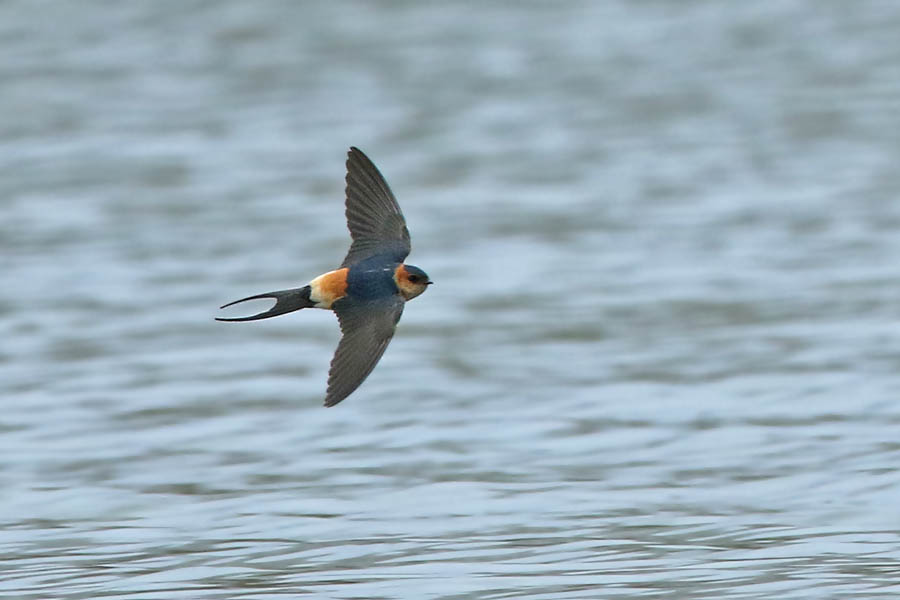
© Volker Hesse

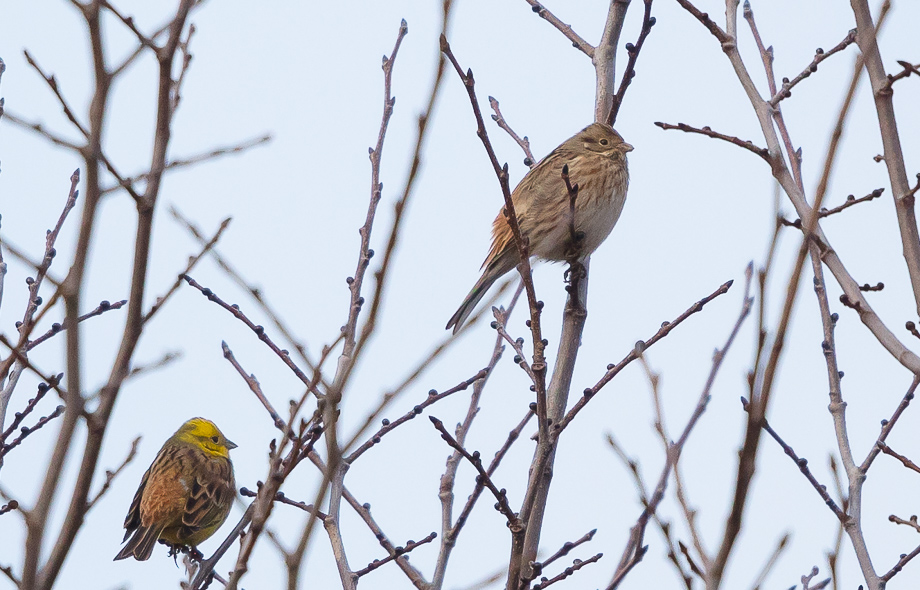
Pine Bunting (Emberiza leucocephalos)
Pine Buntings seem to be becoming more regular these days in Germany, though with only 14 accepted records, they're still among the very rares. Many of the recent birds were rather dull looking female-types so when this smart male showed from January 31st till February 1st near Lachem in Northern Germany it made the finder and some lucky twitchers very happy. There was also a female-type from January 23rd till January 30th near Stuttgart. The last time that two Pine Buntings showed up in one year was 1996!
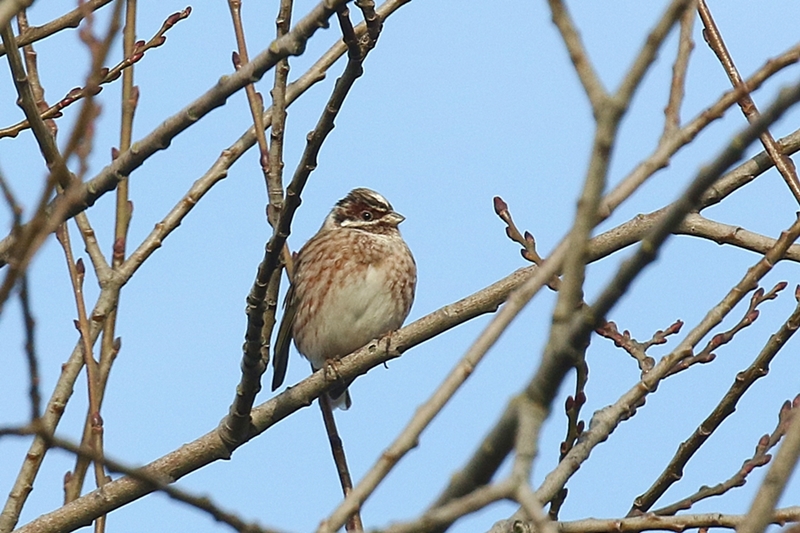
© Armin Kreusel
A huge "Thank You" goes out to all rarity finders and especially to the photographers who let me use their pictures for this article!

Sonntag, 10. Februar 2019

The different types of birders - A typology


There's thousands of birders out there, most countries have a growing birding community. Birding itself, but also social media enables us to get in touch with other bird enthusiasts all around the world. While, of course every person is unique there's just some types of people you keep bouncing into again and again.
Here's my attempt to summarise these different types of birders. Rather than being just one type of birder, most of us are probably a combination of different types.
Don't take them too seriously ;)

The ‘nature lover’

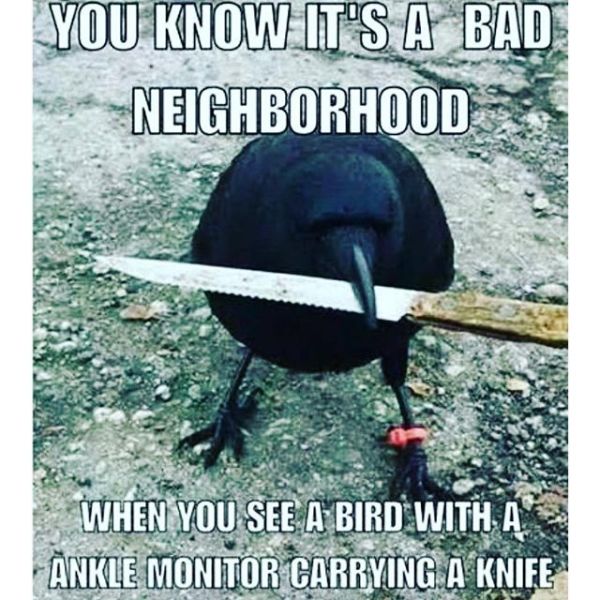
You don’t know much about animals, but you enjoy watching the occasional nature documentary. Cat memes are the best, but that knife-carryingankle-monitor crow is funny as hell too! Did you hear about that Mandarin Duckin Central Park? Crazy, how nature does that, right?!

The amateur birdwatcher

You enjoy the tits/chickadees that turn up at the feeder in your garden. Occasionally you’ll recognise a Mallard or Blackbird while strolling through the park. You feel extremely proud, when you can identify that Jay in the picture that your Facebook friend shared. You (kinda) have a social life outside of birds and birding. Oh look, a Canadian Goose!

The amateur birder

Your biology teacher got you hooked on birding a few months ago. You now know that the term Seagull is pretty meaningless, but other than big gull and small gull you still don’t quite understand how to distinguish them all. Whenever you hear about a nature walk you always try to join in and learn about birds. You spent about as much time with your peers as with senior citizens now, who seem to own nothing but khaki clothes. Even though you’ve just entered the Birding universe, you somehow feel as if you already know just as much about birds as them.

The rising star

You get to know other birders around your age or middle-aged. Their knowledge seems incredible and to keep up with them you delve into all the field guides that cross your path! One day you’ll be that person that you’re looking up to at the moment and one day you’ll definitely be the one to find that rare warbler! If only they didn’t look all the same.
While your life list is growing very steadily, the number of people you associate with shrinks just as steadily. At least, they all share your interest. Being around non-birders starts to bore you death. Who the hell would want to visit the Empire State Building, when a Saw-whet Owl was recently reported on eBird from Central Park? Oh, and that ‘Seagull’ that just flew overhead was a Herring Gull! How could people not know that?

The generalist

During one of the bird walks, which you now regularly lead, there was this herper guy who seemed to be equally as knowledgeable about his critters as you are about birds. Some of your Facebook friends always share those awesome macro pictures of insects. And you recently met this incredibly cute girl, who’s into plants. Weird flex, but ok…
You notice that there’s just so much more to observe than only birds. Also you enjoy that cool sensation of discovering a whole new world, a similar feeling to when you first got involved in birding. There’s just soooo much out there and you want to learn EVERYTHING about every living organism (except maybe plants – they’re boring).

The specialist

The more you immerge into the world of birding, the more you sense that your fulfilment lies within e.g. Seawatching. That feeling of acknowledgement that you received, when you correctly called out the Long-tailed Jaeger first, it just fills you with pride. And you know that that respect is genuine, as you feel similar towards your friend who has become an expert in flight-call identification and you love your other friend who spends his life studying penguins in the Antarctic. But not gull-watchers, those are just weird!

The photographer

Your favourite magazine has always been National Geographic and one day you’ll publish there too! Until then you’ll have to distribute your pictures through Instagram and Facebook and get exposure. At least some of the local Birding magazines have noticed your talent.
While many birders feel as if you aren’t one of them, because you don’t enjoy driving to landfills in winter as much as they do, you wonder how many of them have already had encounters with waders at arms-length distance or an eagle sitting at eye-level right in front of them. And as soon as you get those full-frame pics of that rare Bunting they all come around to praise your ass.

The sound-recorder

Yeah, pictures are great, but the beauty in birds lies within their songs and calls! You always leave the house at ungodly hours in the night to catch that predawn chorus without any human-induced background noises and you carry your self-build parabolic reflector with you. After you return from an exhaustive birding trip around 10AM you listen to the recordings that the stationary microphone on your roof made of nocturnally migrating birds.
Your superior sound identification skills are quite likely the reason, why your team got into first place during the last Big Day.


The local

You go birding in the same patch every day and you have thus become the leading international expert for your local swamp. You don’t only know all the other birders, who visit more or less regularly, but the local birds always come to greet you personally. Nobody has seen more species of birds (and other wildlife) in your patch than you, no one ever has before and no one ever will, but that’s not your main concern, as you won’t rest until the local birds have decided to accept them as one of their own. 


The tourist

The birds in your country are cool, no doubt, but the birds in the tropics are even cooler. So are the birds in high mountain ranges or in the Frigid Zone. It’s just way cooler to watch those thousands of alcids in their breeding range or listen to the roars of a lion, while watching Paradise-Whydahs display, than to stay home and watch the same birds, that you’ve seen about a trillion times before and to hope for a slightly unusual bird amongst them. There’s over ten thousand bird species out there, waiting to be shownto you by a guide

The adventurer

Everybody loves travelling, but they all seem to stay on the beaten path. You’re different: You don’t want some tour guide to show you the same bird that has been shown to hundreds of other travelling birders before. You want to find it on your own, through a mixture of research, expertise, endurance and luck. People like you are the original ornithologists, those who dig up the gold. You’ll be the one to rediscover Kinglet Calyptura. You’re not afraid of getting lost in the impenetrable Fakfak Mountains and would stay a month in the high arctic during winter if it meant you would finally get your lifer Ross’s Gull. People better not get attached to you, who knows if you’ll return from your next trip to the war-zones of Congoon your search for Congo Peacock. Admit it, those darn birds have made you go totally crazy.

The searcher

You’re kind of like the adventurer, except on a budget. Nothing fulfils you more than finding a rare bird on your own. You’ll scan through thousands of Geese in search of the one that doesn’t belong. You know how to distinguish any rare gull from any even rarer gull and you know the flight calls of passerines that have never even been recorded in your country. One day you’ll find that national first. Until then, your social life will have to wait. Probably even after that, who the hell could find those rarities, if not you?! 

The hardcore twitcher


The second your phone vibrates you’re already sitting in your car and driving to the airport, to fly to an uninhabited island, where some lucky bastard (maybe an undiscovered birding god?) just found a Belted Kingfisher. When you hear, that it has relocated to the island nearby, you are the one to talk one of the local fishermen to take you and your birding pals over there. Congratulations, you’ve now seen your 526th species for the country, while you could have added about 100 species to your lifelist for the same money spent. 


The ornithologist-researcher

You’re not really a birder (sensu stricto), but your research revolves around ornithological matters (sensu lato), which is why you enjoy the occasional bird(watch)ing tour with your birder colleagues. Your paper about the post-breeding mating behaviour of moribund Common Murres (Uria aalge, PONTOPPIDAN 1763) was ground-breaking, but for some reasons it’s hard for you to get research grants.

The birder-researcher

You might have a scientific background, but your research for birding papers is mostly done during your free-time. You enjoy travelling to garbage dumps in the Mongolian desert to study the intricate wing-patterns of second-cycle gulls that might, possibly, one day turn up as a vagrant in your home country or you research all the sightings of vagrant Belted Kingfishers to theNetherlands (n=1). Apart from you, only about ten gull-watchers in the world understood and memorized the differences in the wing-patterns between Mongolian Gull and Vega Gull or hundreds of birders start looking for an ultra-rare vagrant Belted Kingfishers, which might not bear any biological significance, but its hella fun (and will raise your status in the birding community)!

The expert

After about 50 years of birding you’ve seen everything out there that Mother Nature could possibly think of. You’ve seen triple hybrids, 10 colour variations of a species that doesn’t even have different morphs and you’ve heard birds imitate other birds that live on the other side of world. You’ve come to the conclusion that biology is just one huge mess and that the term Seagull may in fact be appropriate. You receive about a dozen mails daily, asking you to identify a domestic-type Mallard and the press asks your opinion on matters such as invasive species, feral cats and Mandarin Ducks in Central Park. Nobody seems to care about your answers though, as everybody has already made their minds beforehand. 

The wannabe-expert

After about 50 years of birding you’ve identified abouteverything out there that Mother Nature could possibly think of to subspecies level. You give your opinion on identification environmental matters, even when no one asked and call everyone who disagrees an idiot. If asked for sources for your claims your favourite answer is ‘common sense’ or another similar, and very scientific, method.


What type of birder are you? Which types did I miss?
Write it in the comments below!

Donnerstag, 27. Dezember 2018

Poll: What was the best German rarity in 2018?

2018 ended with a big bang for german birders, when a first cycle Laughing Gull decided to show up right in the centre of Germany's second biggest city, Hamburg on December 21st. It was only the 9th record for the country and the first one in eleven years! Many twitchers managed to lay their eyes on it on the first two days, but on Dec 23rd it was already gone.
It was definitely one of the rarest birds in Germany during 2018, but do you think it might've been the BEST? I'd love to get your opinion. Which was your personal highlight of 2018, the most remarkable vagrant to show up?

2018 was good, but not a great year in terms of rare birds. Many birds allowed for much better views than in other years (e.g. Dusky & Radde's Warbler, Black-capped Bunting), but MEGAs were scarce in 2018. With Italian Sparrow and Swinhoe's Storm Petrel, only two species turned up, that were never recorded in Germany before. However, both species pose great identification problems and will thus need to be assessed by the German rarities commitee. The two most remarkable influxes of 2018 concerned Parrot Crossbills and Rosy Starlings.

Ensuing, I will list some of the rarest birds that turned up in Germany. I only included birds that  somehow stood out in 2018 compared to previous years. The list will therefore only include real vagrants, that don't show up in Germany in small numbers every year (as do e.g. Glossy Ibis or Olive-backed Pipit). Also excluded are rare (but not super-rare species), if they couldn't be twitched (e.g. Collared Pratincole), were seen only by a single observer (e.g. King Eider) or if there was no accompanying evidence, such as pictures or sound (e.g. Lesser Yellowlegs).

What was the best vagrant to Germany in 2018?


pollcode.com free polls

Black Scoter (Melanitta americana)
With only one previous accepted record of this nearctic species (13.-17.02.2008, St. Peter-Ording/Schleswig-Holstein, adult male) and several misidentifications in the past, this was definitely one of the rarest birds to be found this year. Earlier records (e.g. 11.03.2006, 31.12.2007) might have been correct but were deemed unsufficiently documented. Thus, everybody must've been happy how this year's bird showed so well to many dozens, if not hundreds of twitchers for a prolonged time period (03.02.-08.04.2018) and even returned the next winter (from 04.12. onwards), so that anybody who might have missed it is now getting another chance. How considerate!
Pazifiktrauerente  - Henning Fedders
Great comparison of Black (left) and Common Scoters (right) at Schöneberger Strand © Henning Fedders
Black-browed Albatross (Thalassarche melanophris)
The returning bird, which brought ecstasy to the birders who managed to connect with it when it first showed up in 2014, returned for its 4th consecutive season to German waters. While the initial ecstasy has now rather turned into a general enjoyment of this stunning, graceful bird, this albatross must still be considered one of the absolute highlights of any birding years. This year it could be observed 31.03.-25.07.2018 on an almost daily basis, except for a short period in late May/early June, after an unpleasant crash in a local aviary. Lacking a partner in the northern hemisphere, it searches the vicinity of other big birds, such as Gannets, Mute Swans, Greylag Geese and a Red-crowned Crane Crane (see below). A tragic figure that will nevertheless hopefully continue to please birders from near and far for many more years! And who knows, maybe he (or she?) will bring a partner one day?!
Schwarzbrauenalbatros  - Horst Habke
The Black-browed Albatross is an extremely beautiful bird and was already feared dead when it wasn't seen for two weeks, after this short encounter with a captive Red-crowned Crane on Sylt. Luckily it returned healthy soon after © Horst Habke

Swinhoe's Storm Petrel (Oceanodroma monorhis)
One of the most surprising finds for Germany in 2018 was the Swinhoe's Storm Petrel that was observed for several minutes after a severe storm from the northwest. A few lucky observers on Wangerooge couldn't believe what they were seeing during a Leach's Storm Petrel influx on 03.10.2018. The observers are very confident, there was absolutely no white on the rump and the ID has since been confirmed by an independent expert. There's another convincing old record from 24.09.2004, that is still pending. Will Swinhoe's Storm Petrel finally be added to the German list?
Art nicht in der Liste  - Christopher König
One of the videograbs showing the dark-rumped Storm Petrel that was observed during a seawatch on Wangerooge © Christopher König
Cory's Shearwater (Calonectris diomedea)
At first glance, this species might seem a little odd in this compilation, given how it gets reported on a yearly basis in German waters and how mediocre most observations are. However, there are still only few accepted birds (20 records 1977-2016, less than 10 before) and the last accepted one is from 2012! Given how many birders managed to connect with this bird on 25.10.2018 on Heligoland it deserves a spot on this list, even though admittedly it's chances of winning are very slim.

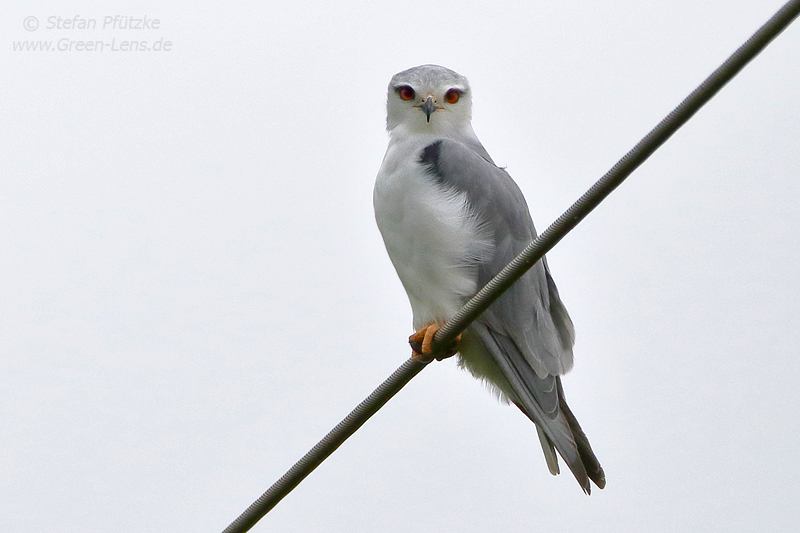
Black-winged Kite (Elanus caeruleus)
No doubt, this is an extremely charismatic species, however it's not particularly rare anymore and becoming more and more regular each year. There were only 16 accepted (+2 cat. D) records until 2014, but in subsequent years 6 (2015), 10 (2016) and 9 (2017) records followed. 2018 wasn't any different with another 6 birds on record. Remarkable was especially the record of an adult male which started to build a nest. To the enjoyment of hundreds of twitchers it stayed for many months in the same place. Will we soon get a new breeding species in Germany?
The piercing look of the Black-winged Kite in Stemwede, which even build a nest during its stay © Stefan Pfützke
American Golden Plover (Pluvialis dominica)
Only 10 previous records existed for this beautiful, but hard to identify species so far, but 2018 saw another 2 records. Especially noteworthy was the bird from Katinger Watt, Schleswig-Holstein (28.-31.05.2018) in breeding plumage, that was successfully twitched by dozens of birders. With increasing knowledge about the identification, hopefully more records will follow in future years!
Seeing this species in breeding plumage is always a treat © Paul Ehlers
Laughing Gull (Leucophaeus atricilla)
There are already 9 previous records of Laughing Gulls in Germany, with one bird even staying and returning for 3 summers. However, all these records stem from between 1997 and 2007 and anybody who got into birding or twitching later didn't get a chance to see this species in Germany until  21.12.2018, when a first cycle bird turned up in the city centre of Hamburg and showed beautifully to the twitchers that came the following day. While the bird itself might not have been the most beautiful one (wait till it gets older!), the observations that it allowed for were remarkable!
This immature Laughing Gull chose to visit the harbour and christmas market of Hamburg © Paul Ehlers
Franklin's Gull (Leucophaeus pipixcan)
Another American gull that turned up in Germany this year (27.-28.07.2018 in Bonn), even a tiny bit rarer than the Laughing Gull with only 8 accepted records to date, furthermore it was a beautiful adult. However, it wasn't quite as friendly to the twitchers who didn't arrive on the day of discovery, as it flew away very early in the morning, never to be seen again. But isn't it a beauty?
Präriemöwe  - Oliver Käseberg
This adult Franklin's Gull could be twitched in Bonn on July 27th, but disappeared very early in the morning on July 28th never to be found again © Oliver Käseberg
Pallid Swift (Apus pallidus)
Many northern and central european countries reported an influx of Pallid Swifts during the autumn of 2018 with e.g. 8 reports from the Netherlands, 6 from Sweden and as many as 23 from the UK! Most German birders kept watching the skies, but in vain (several unidentified Swifts!), except for the lucky few who got lucky on Heligoland (13. & 15.11.2018) and some twitchers on Amrum, who'd originally set out for a disappearing Rustic Bunting, but returned home with stunning pictures of a Pallid Swift instead (31.10.2018)!
Fahlsegler  - Eike Schulze
This Pallid Swift must've been a great compensation after dipping on a Rustic Bunting on Amrum © Eike Schulze
Asian Desert Warbler (Sylvia nana)
Even though this tiny bird, which could be observed 19.-27.10.2018 on Heligoland, might be described as drab on the first look, it seems likely to be one of the contenders for the title BIRD OF THE YEAR 2018. This comes from a combination of subtle beauty, accentuated by the piercing yellow eye, its rarity (only 3 previous records: 21.06.-07.07.1981, Bottsand near Kiel (male building nest); 24.-27.05.2002, Heligoland; 20.10.-02.11.2017, Heligoland), its inquisitiveness and some kind of mystery (could it have been the same bird as last year?). 
Wüstengrasmücke  - Helmut Bähr
Could this have been the same bird as in the previous autumn? © Helmut Bähr
Like last year's bird this bird was absolutely fearless © Tobias Rautenberg
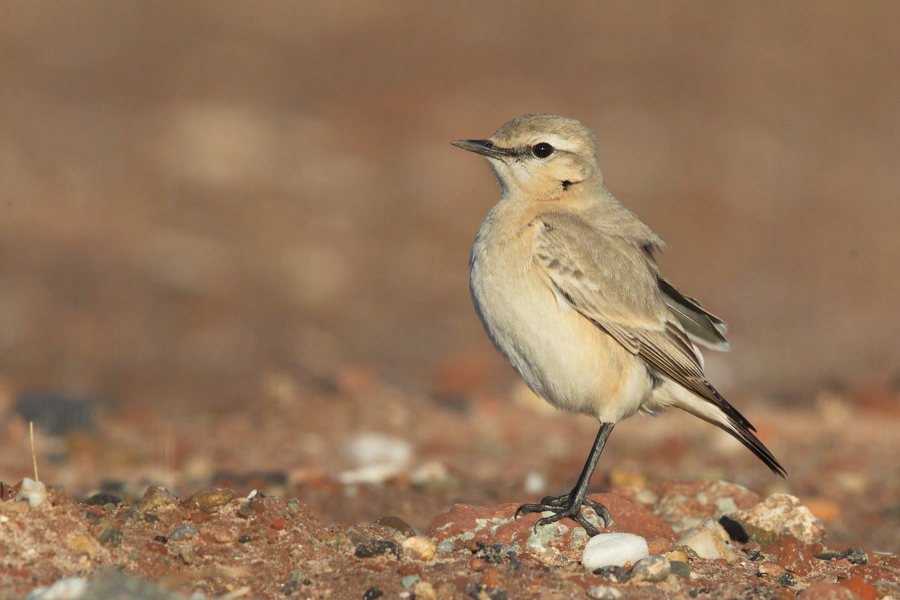
Isabelline Wheatear (Oenanthe isabellina)
This bird must likely be described as an underdog. It showed beautifully only on 03.11.2018 on Heligoland and would've been an absolute Mega until very recently (first record 14.-17.10.1999), but has now become more regular in the last years. Still, there were only 11 previous records in Germany  and even though the species isn't very colourful, its pastel colours give it a subtle beauty and elegance. Plus, it's one of those enjoyable ID challenges: While initially it can be pretty hard to clinch the ID, once you've observed it long and close enough you'll go home confident and happy about your find!
Would you have noticed this rarity in the field? © Jens Voß
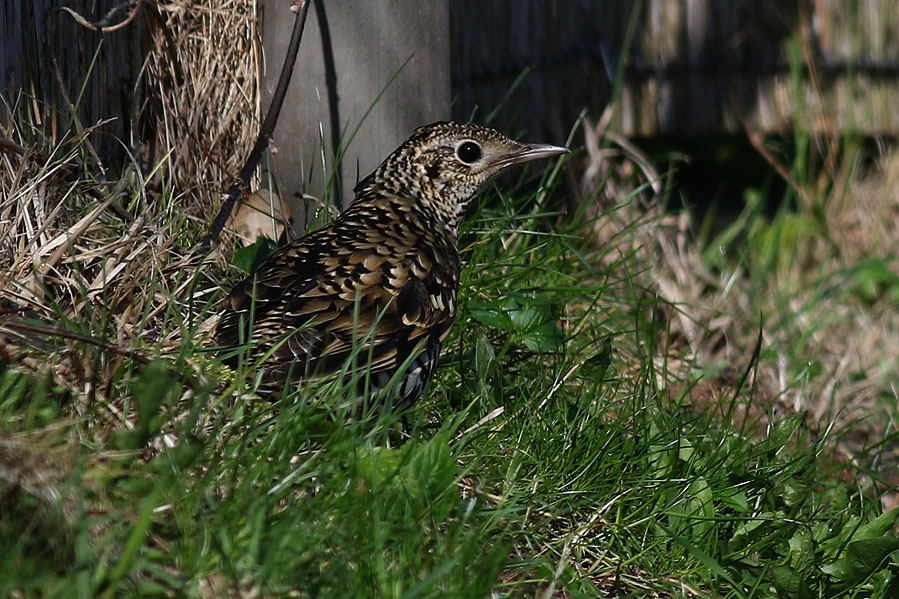
White's Thrush (Zoothera aurea)
This beauty will always be a crowd-favourite. Only few people got to lay their eyes on the bird that was caught and ringed on 26.04.2018 on Heligoland, but isn't this what adds to the fascination of White's Thrush? Its elegancy combined with the mystique surrounding this shy species makes it a dream bird for any birder, add to that its rarity in recent years (only 8 records since 1977, ca. two dozens before that, the last accepted one from 2013) and you've got the perfect contender for BIRD OF THE YEAR 2018. If only it had stayed a little longer...
White's Thrushes are very skulky birds, catching one of them as a vagrant must have given a great adrenaline rush to the ringers © Jochen Dierschke
Rosy Starling (Pastor roseus)
Normally Rosy Starlings wouldn't be considered for this compilation, as they turn up annually in small numbers, mostly as juveniles, which additionally aren't very good looking birds. However, this year southern Europe saw a huge influx of Rosy Starlings in late May and early June, with many thousand smart-looking adults turning up as far west as Italy and hundreds still reaching Spain. German birders were also hoping to get their piece of the cake and even though the numbers weren't nearly as high as south of the Alps the year 2018 still was exceptional with about 30 records, of which around 20 turned up during the influx, mainly in southernmost Germany or on Heligoland or the coast. Even if the Rosy Starlings of 2018 don't receive the title of BIRD OF THE YEAR 2018, their influx certainly has to have been the birding event of the year in Europe!
Even though not nearly as many Rosy Starlings turned up in Germany as in southern Europe, their number was still way above average and they made dozens of birders very happy in 2018 ©Winfried Scharlau
Pine Bunting (Emberiza leucocephalos)
There are about 21 previous records of Pine Buntings in Germany, nevertheless it was a notoriously hard bird to connect with, with past individuals often quickly disappearing or hiding very well in the vegetation, at least until 2018. However, a bird in Römerstein, Baden-Württemberg that stayed from 24.01.-21.02.2018 deviated from its predecessors and beautifully showed to dozens of happy twitchers, who often still got the feeling of a hard-earned bird, as the bird would prove a challenge to find in the landscape and to safely identify. If you saw that bird, then you really earned it!
This Pine Bunting was a real challenge to many birders, both in terms of finding and identfying it © Oliver Käseberg
Cretzschmar's Bunting (Emberiza caesia)
Another favourite for the title BIRD OF THE YEAR 2018 has to be the beautiful Cretzschmar's Bunting that filled hundreds of birders' and photographers' hearts with glee from 30.4.-03.05.2018 at Speicherbecken Geeste after it had been posted online identified as a regular Ortolan Bunting. Luckily some eagle-eyed birders immediately noticed the misidentification and in the following days they, and many more, got to enjoy close-up views of the second Cretzschmar's Bunting to appear in Germany since the 19th century (11 previous records between 1848 and 1879 all from Heligoland, plus one bird on 09.05.2016 on Sylt)!
Hundreds of twitchers managed to connect with this bird, which posed nicely © Paul Ehlers
Black-headed Bunting (Emberiza melanocephala)
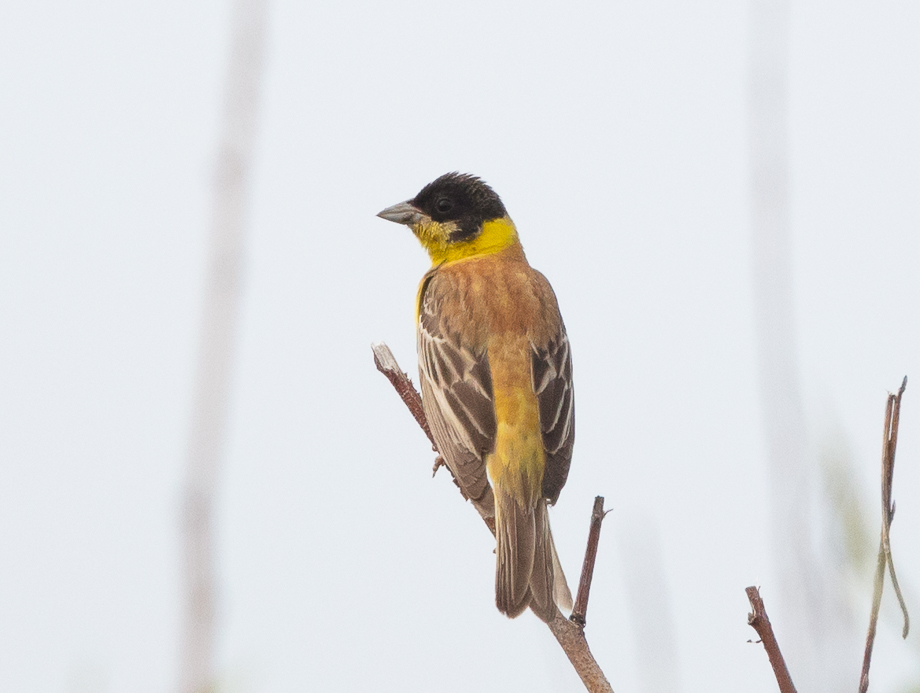
The information about past occurrences of Black-headed Buntings is very vague, as birds were often considered as escapees in the past and females and juveniles still are impossible to identify safely. It's therefore a fairly recent realization that they are near-annual natural vagrants to Germany. Nevertheless, the species was a blocker, missing from most twitchers lists until last year, when - unforeseen - a pair bred successfully in southern Germany. Birds in the past only rarely stayed for longer than a day, so that twitches were normally unsuccessful. Though the breeding birds of 2017 allowed for the species to find its way onto the list of many twitchers, the 2018 birds were still special on their own. Three males turned up on Heligoland (31.05.2018; 01.-04.06.2018; 26.06.2018), one in the Königshovener Höhe (30.05.2018) in Nordrhine-Westphalia. Adding to their smart looks came the cooperativeness of the first two birds on Heligoland, which made for great photo motives, even for twitchers!
This Black-capped Bunting must've been one of the most cooperative ones to ever show up in Germany © Oliver Käseberg
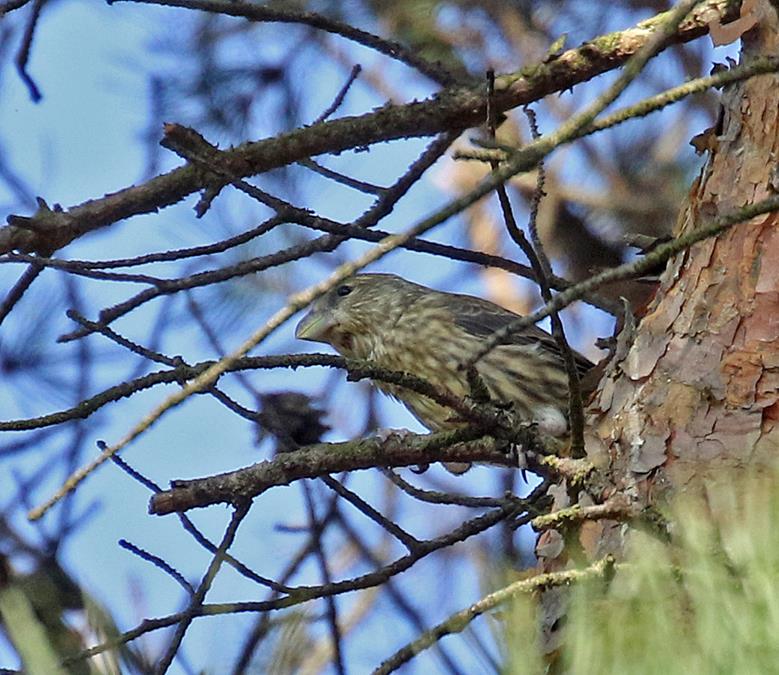
Parrot Crossbill (Loxia pytyopsittacus)
Does anyone still remember the hype when the first Parrot Crossbills started to turn up on Heligoland during the autumn of 2013?! The species a huge blocker before that and only very few people had this species on their list, even though many dozens of records had been accepted. After the influx during the winter 2013/14 another influx happened in the winter of 2017/18. Hundreds of birds must have reached Germany during that winter and in the aftermath several breeding attempts, at least one of them successful, could be recorded. It therefore feels like this species must also be mentioned here!

Kiefernkreuzschnabel  - Gerd Rotzoll
Hundreds of Parrot Crossbills must've reached Germany in the winter of 2017/18 © Gerd Rotzoll
For the first time ever was a successful breeding of the species recorded in Germany. Seven pairs were present, at least 3 raised juveniles © Arne Torkler

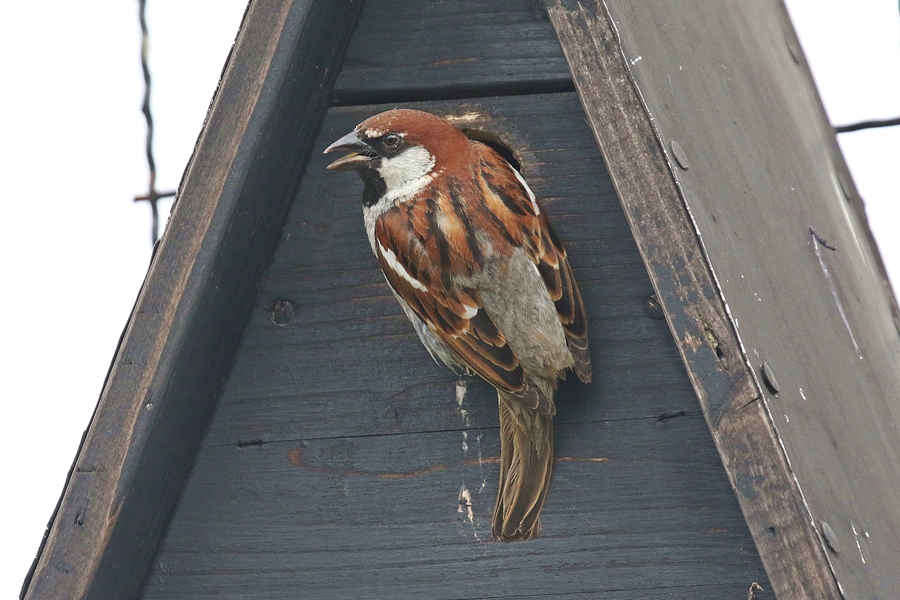
Italian Sparrow (Passer italiae)
While it's DNA is still being tested, this bird is likely to become the only addition to the German list from 2018. The bird showed beautifully in early June in a private garden, but unfortunately only very few birders got a chance to observe it, due to difficulties to arrange public access to the site. Nevertheless, this record bears a certain amount of suspense with it: Was this bird the "real deal"? Did it come all the way to northern Germany on its own? What else is lurking out there in private gardens? 
The only new bird for the German list during 2018. At least if it gets accepted © Armin Kreusel